Blog
Type
Region
Destination
-
Show all
Ship
Highlights
-
Show all
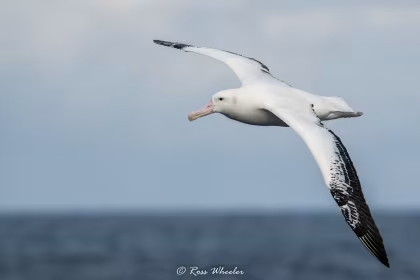
The Eight Albatrosses of Antarctica and the Sub-Antarctic
Whether you’re bound for Antarctica, the sub-Antarctic, or some combination of both, this entry will give you all the important albatross info as well as where these birds can best be found.
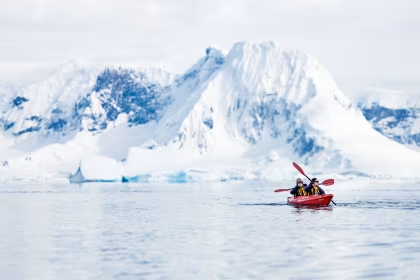
Adding Antarctica to Your Seven-Continents Bucket List
It’s a common pursuit among serious travelers to visit all seven continents. And indeed, the term “bucket list,” which became popular (if not overused) since the 2007 movie, fits naturally with this goal.
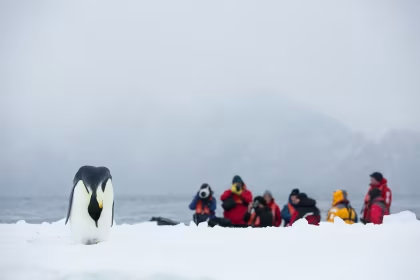
Five Reasons You Should Cruise the Ross Sea Immediately
In our quest for the little-known holiday destination (that’s still popular enough to have its own fully developed spa and gift shop), we travelers sometimes overlook the truly underrated gems this planet has hidden up its sleeve.
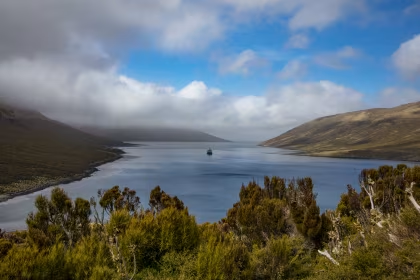
Visiting the Nearly Unknown: New Zealand’s Campbell Island
Campbell Island is located south of Bluff, New Zealand. It's best known for its flora and fauna. Read on to discover which wildlife you can find here.
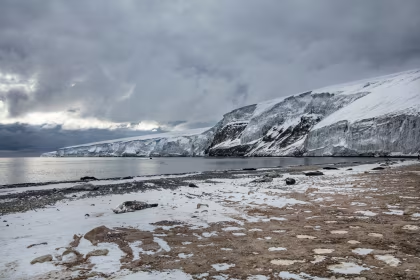
An igneous paradise: Franklin Island
Franklin Island is located in the Ross Sea. It's not just a pile of volcanic rubble, but actually remnants of a shield volcano. Read on and learn more.
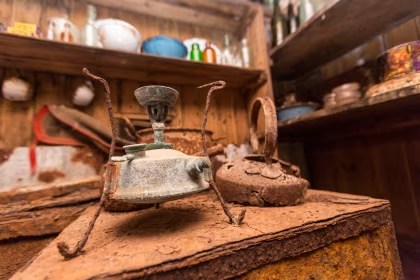
The First Overwintering Hut in Antarctica
In 1899, Carsten Borchgrevink and his nine crewmen became the first to overwinter in a hut in Antarctica.
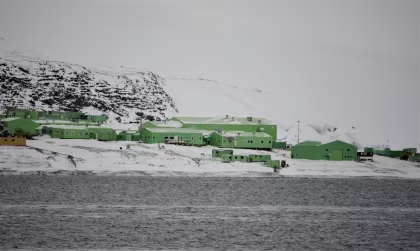
Scott Base’s 60th anniversary
The Trans-Antarctic Expedition (TAE), also known as the Commonwealth Trans-Antarctic Expedition (CTAE), aimed to complete the first overland crossing of the Antarctic Continent: a 3,473-km journey from the Weddell Sea all the way to McMurdo Sound via the South Pole. The TAE consisted of two teams: The Crossing Party, led by Dr Vivian Fuchs of Britain and the Ross Sea Party, led by New Zealand explorer, Sir Edmund Hilary. The Ross Sea Party’s role in the TAE was to support the Crossing Party’s attempt by building a base at McMurdo Sound, laying supply depots and establishing a vehicle route from the Polar Plateau through the Western mountains and back to Ross Island.
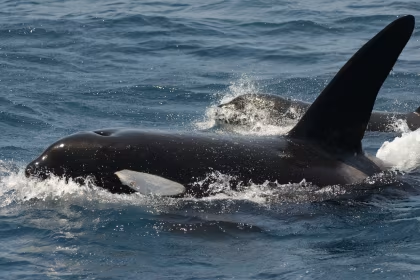
Eight Antarctic Whales You Might See During Your Expedition Cruise
They're powerful, they're beautiful, they're really, really big. Whales are a wonder of the natural world, and one of the best places to spot them is Antarctica. But which whale species might you see there?
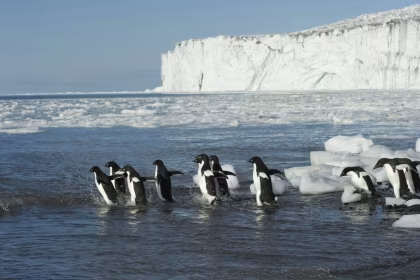
Oceanwide Supports Antarctic Protected Areas
Oceanwide Expeditions applauds the adoption of the Ross Sea region marine protected area recently adopted by the Commission for the Conservation of Antarctic Marine Living Resources (CCAMLR) and strongly supports more areas of protection.
Oceanwide on Marine Protected Areas in Antarctica
Oceanwide Expeditions welcomes the adoption of the Ross Sea region marine protected area adopted by the Commission for the Conservation of Antarctic Marine Living Resources (CCAMLR) in its XXXV meeting in October 2016.
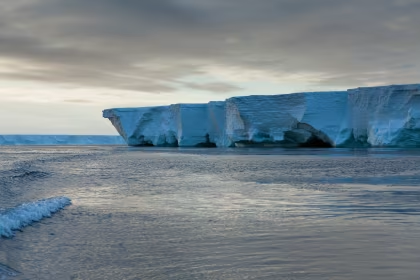
Science of the Ross Ice Shelf
Antarctica’s Ross Ice Shelf is enormous in size, covering 487,000 sq. km – the size of France – and has a thickness ranging from a few hundred metres near the sea to over 1,200 metres away from the floating edge.
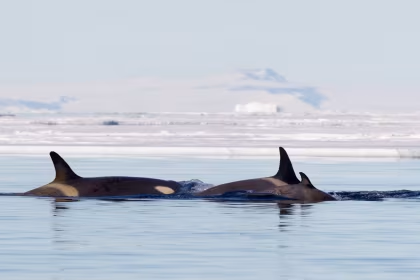
Antarctica’s first Marine Protected Area
In October of this year, the Commission for the Conservation of Antarctic Marine Living Resources, which is comprised of 24 countries including the United States, the European Union, Australia and New Zealand, reached a consensus on a New Zealand/United States proposal to establish a large-scale Marine Protected Area (MPA) in the Ross Sea region.
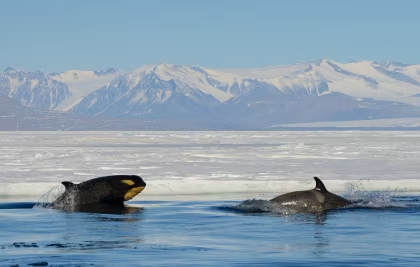
Oceanwide discounts voyages to celebrate Ross Sea protection news
Oceanwide Expeditions is celebrating the news that the Ross Sea will become the world’s largest marine protected area by offering discounts on its two upcoming trips to this vast Antarctic wilderness.
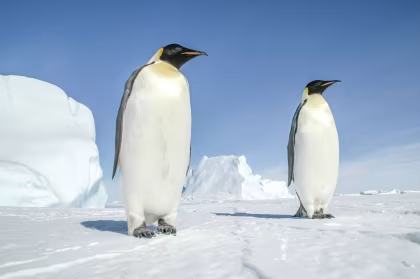
Antarctic Icon: 44 Facts About the Emperor Penguin
Emperor penguins are truly the emperors of Antarctica as not only do they survive through the harsh Antarctic winters but they also are capable of breeding during the worst weather conditions on Earth.
The Ross Sea Becomes Earth's Largest Protected Marine Area
The Ross Sea in Antarctica will become the world’s largest protected marine park. This has been signed in Hobart today by 24 countries and the European Union. Fishing (including krill and whales) will be banned in a protected zone of the size of France and Spain combined.
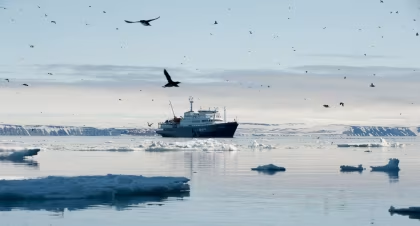
Scott’s ponies becoming unstuck
‘’English-men where flabbergasted…they had never dreamt that dogs could run in that way before a sledge, and already they felt contempt for their dear ponies. Suddenly they were gripped by wild excitement, cheered, and waved their caps. Our drivers returned their greetings and cracked their whips’’.
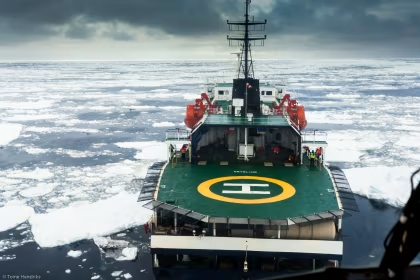
Explore the Ross Sea and Antarctica’s Largest Ice Shelf
Oceanwide Expeditions’ “Spectacular Ross Sea” voyage takes passengers through the Ross Sea, an immense bay south of the Antarctic Circle, one of the planet’s most remote areas and where few expeditions venture. It sails from South America to New Zealand (and in reverse) on the ice-strengthened vessel “Ortelius” – specially equipped with two helicopters to access hard-to-reach sights and afford aerial views of jaw-dropping scenery. The 32-day trip departs on Jan. 13, 2017, from Ushuaia, Argentina; and on Feb. 15, 2017, from Bluff, New Zealand.
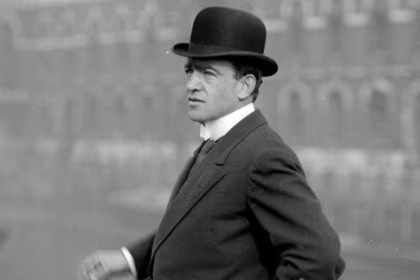
Shackleton’s Push to the South Pole
On the evening of February 11, 1907, Irish-born polar explorer Ernest Shackleton, already among the more famous polar explorers, announced his intention to embark on a momentous Antarctic expedition. His goal: to reach the South Pole.
Roald Amundsen’s polar exploits
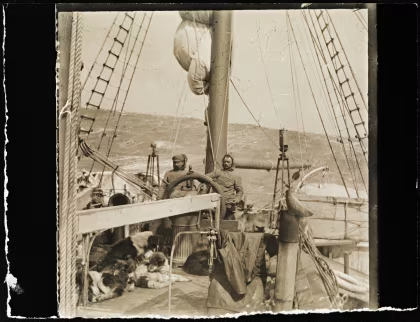
Roald Amundsen had been, unlike Scott, dedicated to exploration ever since he was 15 years old reading about Franklin’s Arctic expeditions. Amundsen wrote that ‘the narrative that appealed to me most strongly was the suffering he and his men endured. A strange ambition burned within me to endure those same sufferings’ and so he dedicated himself to becoming an Arctic explorer.
Abandoned Antarctica: Five Remarkable Stations Left Behind
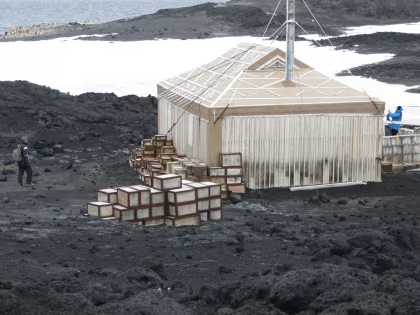
For centuries, the most extreme scientists, explorers, fishermen, and travellers have called Antarctica home. The continent is peppered with research stations that represent the valiant efforts of humankind to study the unknown.
The First Buildings in Antarctica: Borchgrevink’s Historic Huts
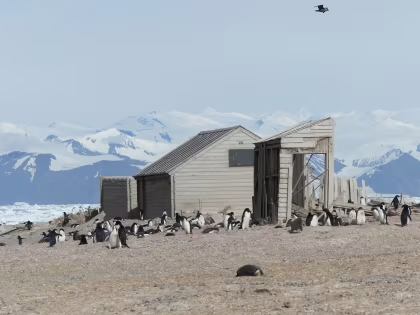
Borchgrevink’s huts at Cape Adare are notable not only for their important role in the discovery of Antarctica, but also because they were the first buildings erected on that continent.
The first race to the South Pole in 50 years
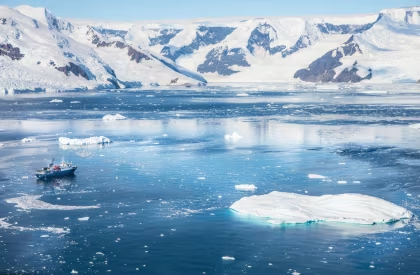
James Clark Ross’s British Royal Navy expedition of 1839-1843 launched the most successful expedition to Antarctica by pioneering an entry into the region of sea that now bears his name, opening the door to the inhospitable continent for future expeditions to come.
